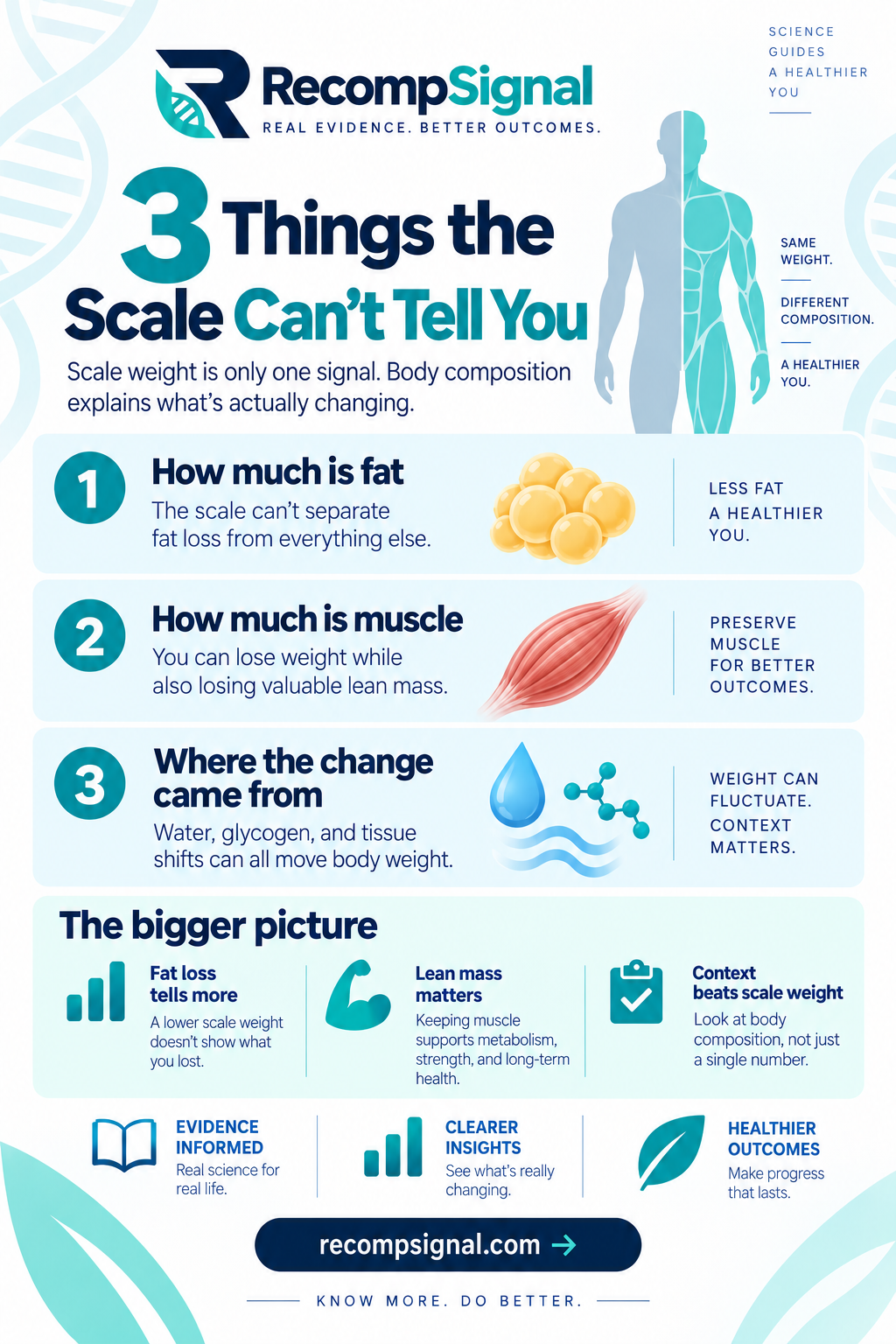
What the Scale Can’t Tell You
Fat loss, lean-mass retention and water shifts require separate evidence.
Review the distinction →The scale shows total body weight. It cannot tell you how much change came from fat, lean tissue, water, glycogen or other components. That distinction changes how a result should be interpreted.
Body weight is the combined mass of fat, muscle, organs, bone, water, glycogen and other tissue. A lower number tells you that total mass fell; it does not identify which compartment changed.
Two people can lose the same number of pounds and finish with different body-composition outcomes. A result that preserves more lean mass while reducing fat mass can have different implications for strength, function and long-term composition than the same scale loss accompanied by greater lean-tissue loss.
Get the free 2026 Body-Recomposition Evidence Map with evidence maturity, body-composition signals and pipeline status in one reference.
Get the free Evidence Map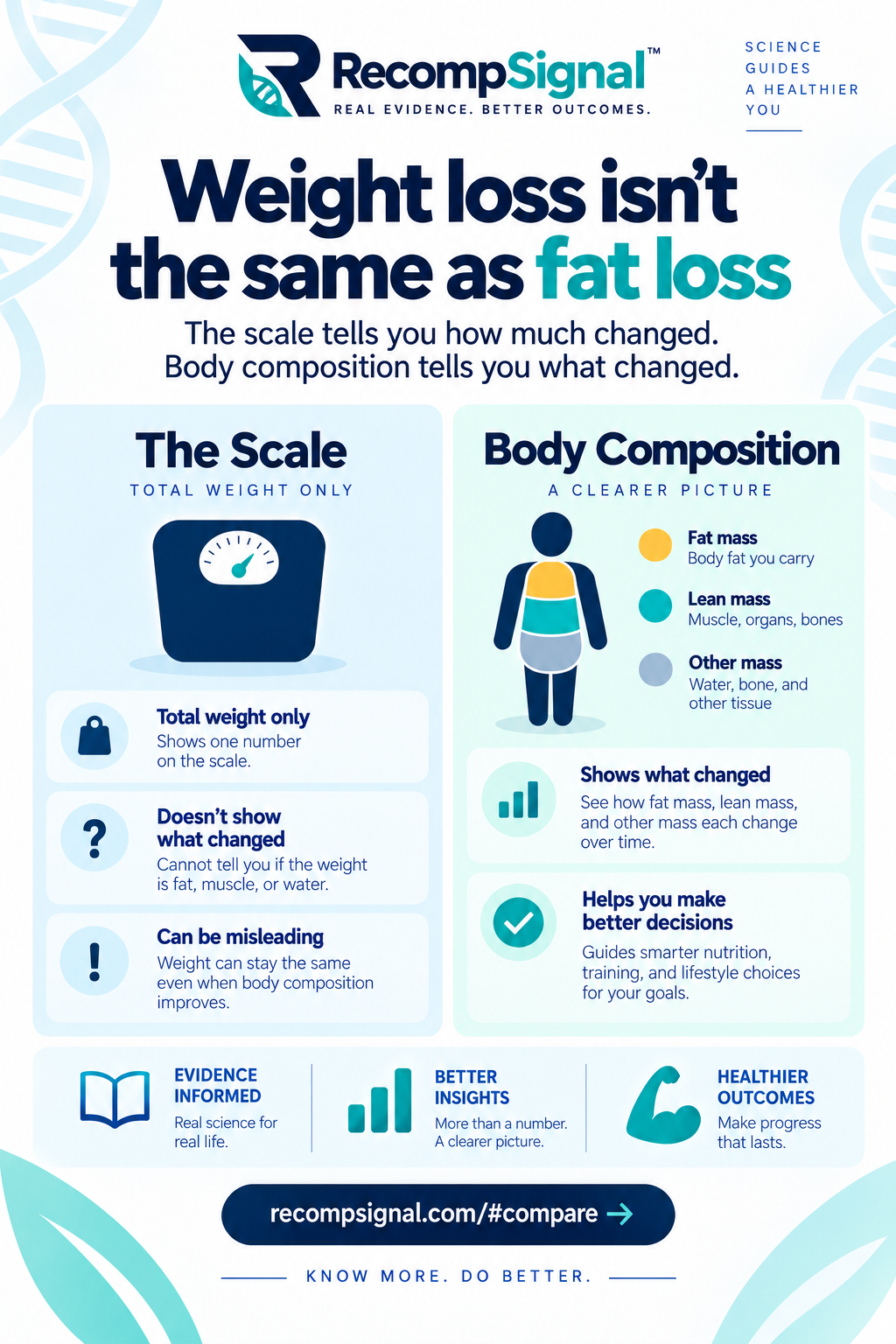
Scale weight can move because of fat, lean tissue, water, glycogen and digestive contents. The infographic introduces the distinction; the page text provides the accessible evidence context.
Browse related InsightsFat loss, lean-mass retention and water shifts require separate evidence.
Review the distinction →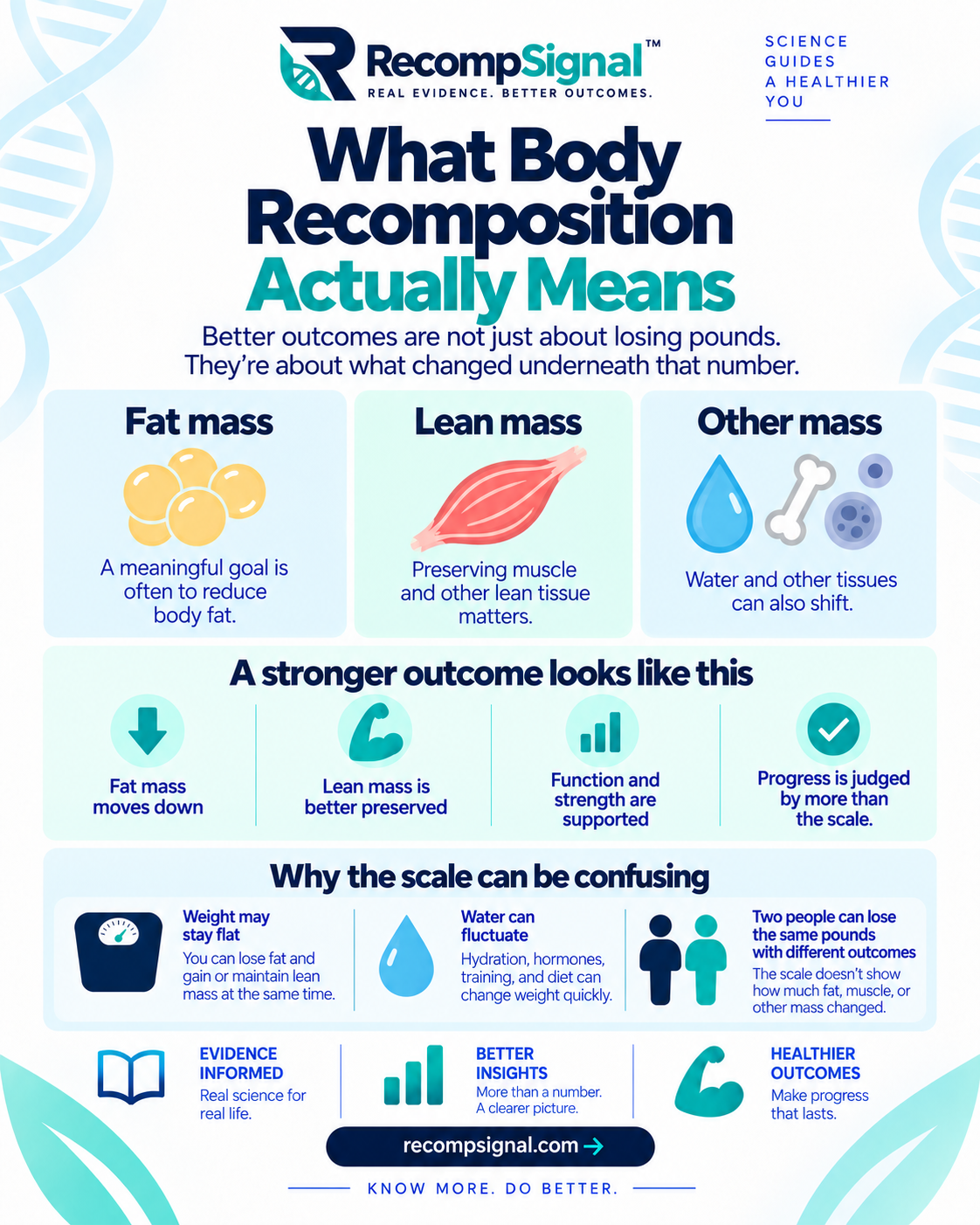
Fat and lean tissue can change in different directions.
Explore lean-mass evidence →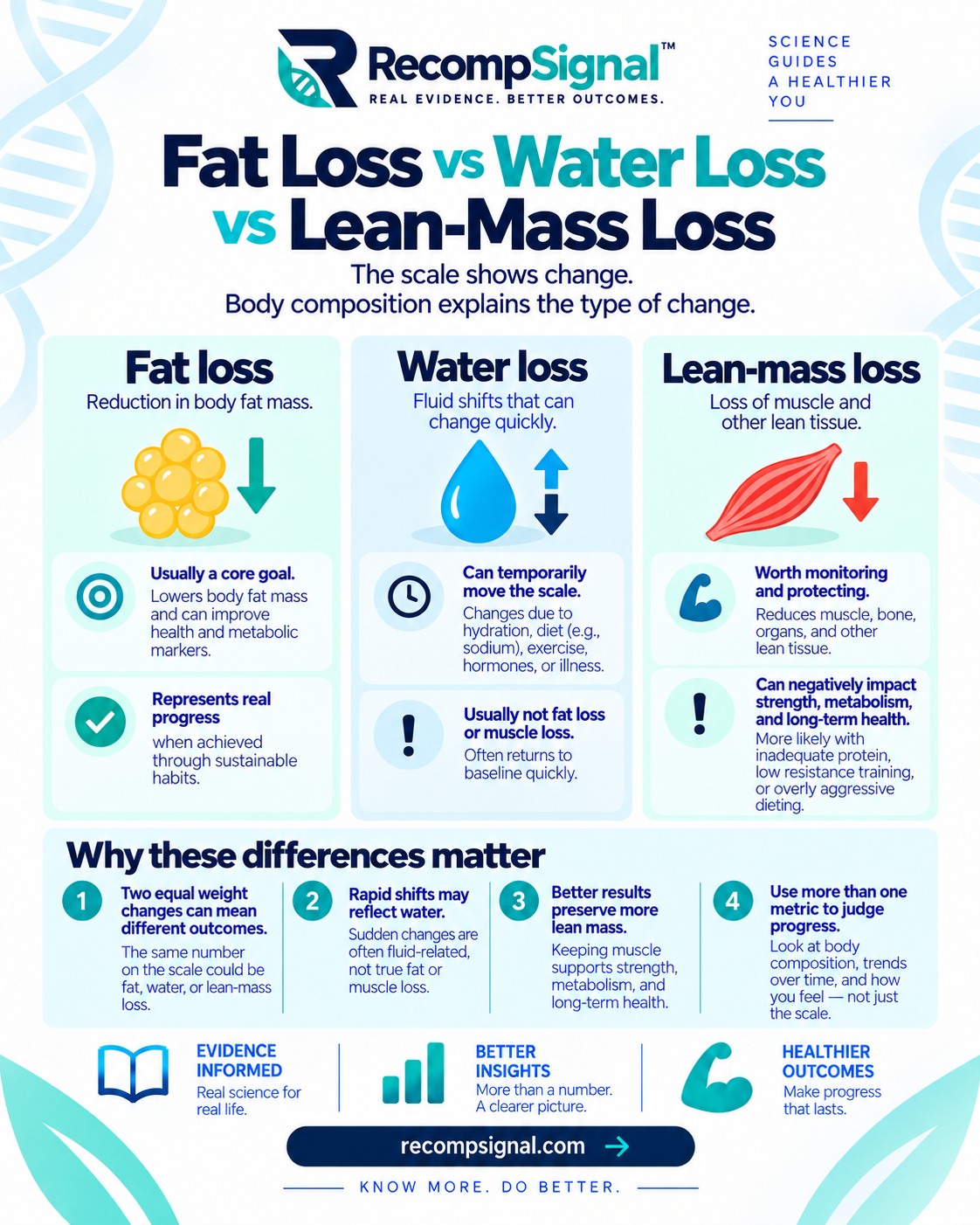
The measurement method determines what can actually be concluded.
See how evidence is graded →A short visual summary of the information missing from scale weight.
More RecompSignal videos →