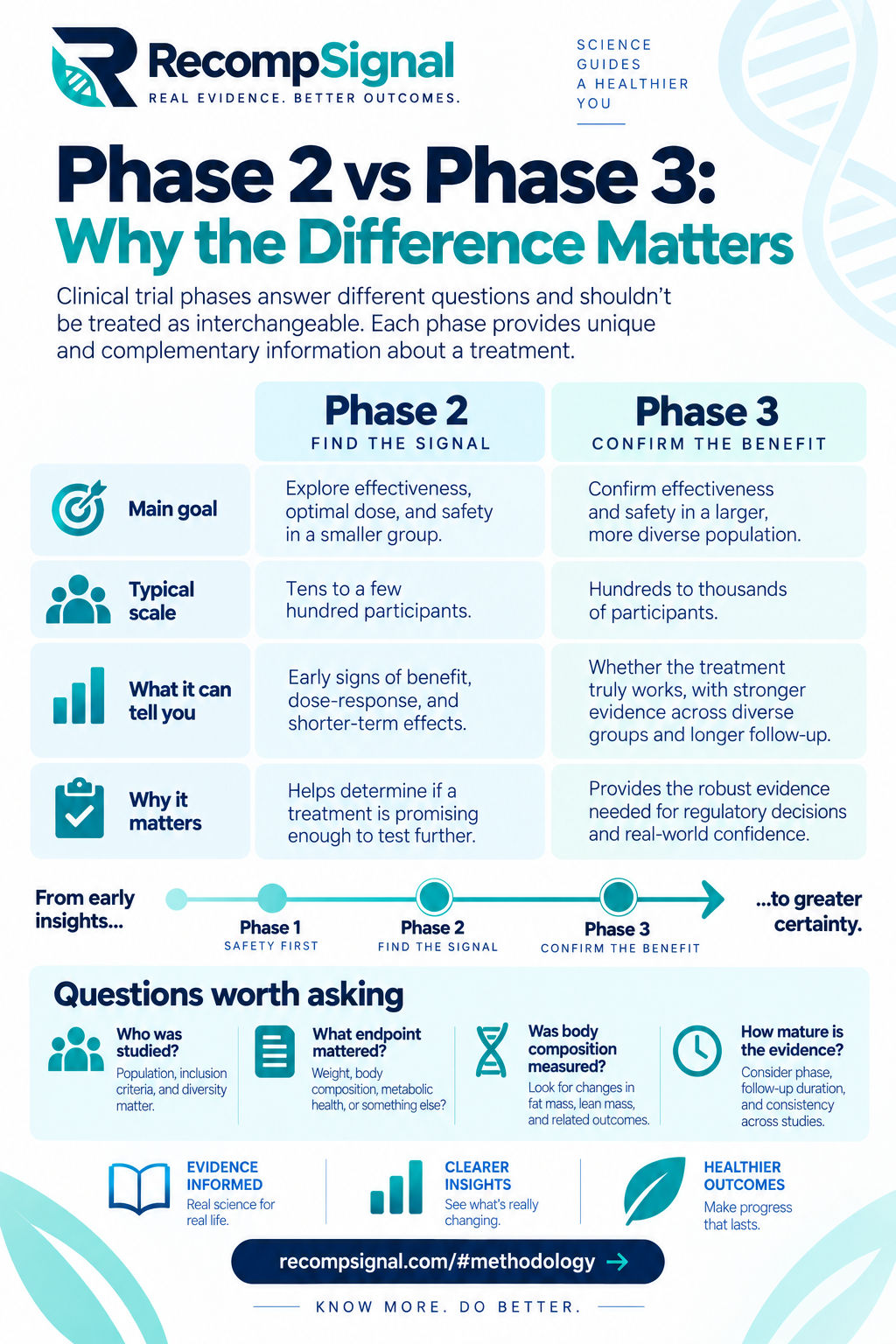
Phase 2 vs Phase 3
Why later-stage trials generally reduce—but do not eliminate—uncertainty.
Read the guide →The M0–M5 framework describes how developed a therapy or research program’s overall human evidence base is. Outcome Evidence Strength separately shows how well a specific result is supported.
Get the free 2026 Body-Recomposition Evidence Map with evidence maturity, body-composition signals and pipeline status in one reference.
Get the free Evidence MapScores describe evidence for the named outcome in the sources reviewed on each card. They are editorial judgments, not a validated clinical grading system. Weight, fat and lean scores concern measured change; the function score concerns demonstrated benefit. A high lean score does not mean lean tissue was preserved.
| Score | Evidence standard |
|---|---|
| 0/5 | Not established in reviewed human outcome evidence; may be unreported, awaiting results or unsupported. Not proof of no effect. |
| 1/5 | Indirect or preclinical support only; no persuasive human outcome result. |
| 2/5 | Preliminary human result, conference abstract, sponsor-only result or exploratory/mixed functional finding. |
| 3/5 | At least one published randomized trial or randomized substudy directly measuring the outcome; limitations remain. |
| 4/5 | Consistent direct results across more than one controlled human study in the relevant setting. |
| 5/5 | Broad, replicated randomized evidence with substantial clinical/regulatory experience for the specific outcome. |
Registration alone receives no efficacy points. Approval for weight management does not earn a muscle-preservation score. A newer phase number does not automatically raise outcome ratings. Each card explains its rating; scores are restricted to cited evidence and may change as sources are added.
Evidence Maturity describes how developed the overall evidence base is. Outcome Evidence Strength describes support for a specific result. Source Tier identifies what kind of source supports the claim.
None of the three is a treatment recommendation or a prediction of individual response.
Apply the framework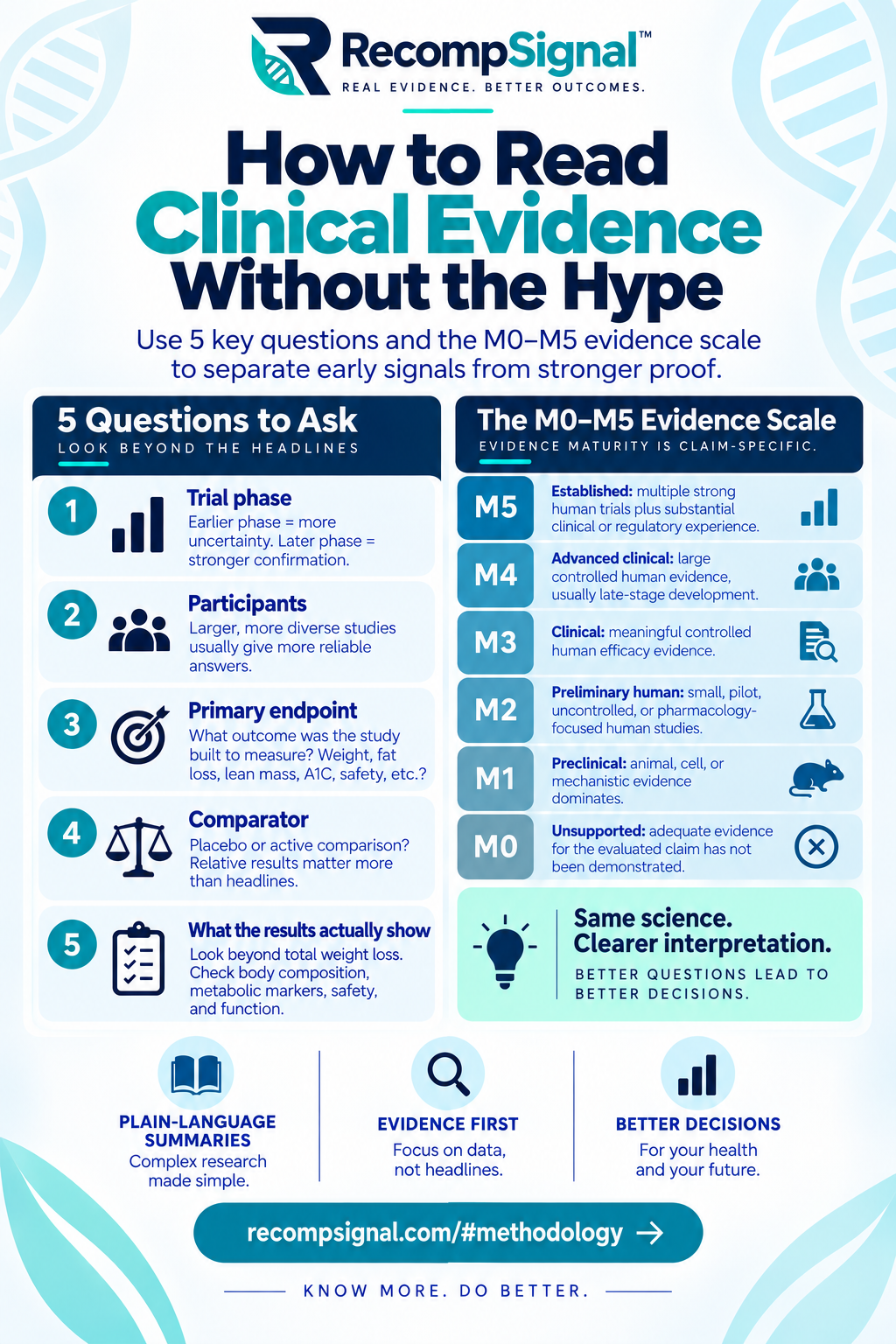
Why later-stage trials generally reduce—but do not eliminate—uncertainty.
Read the guide →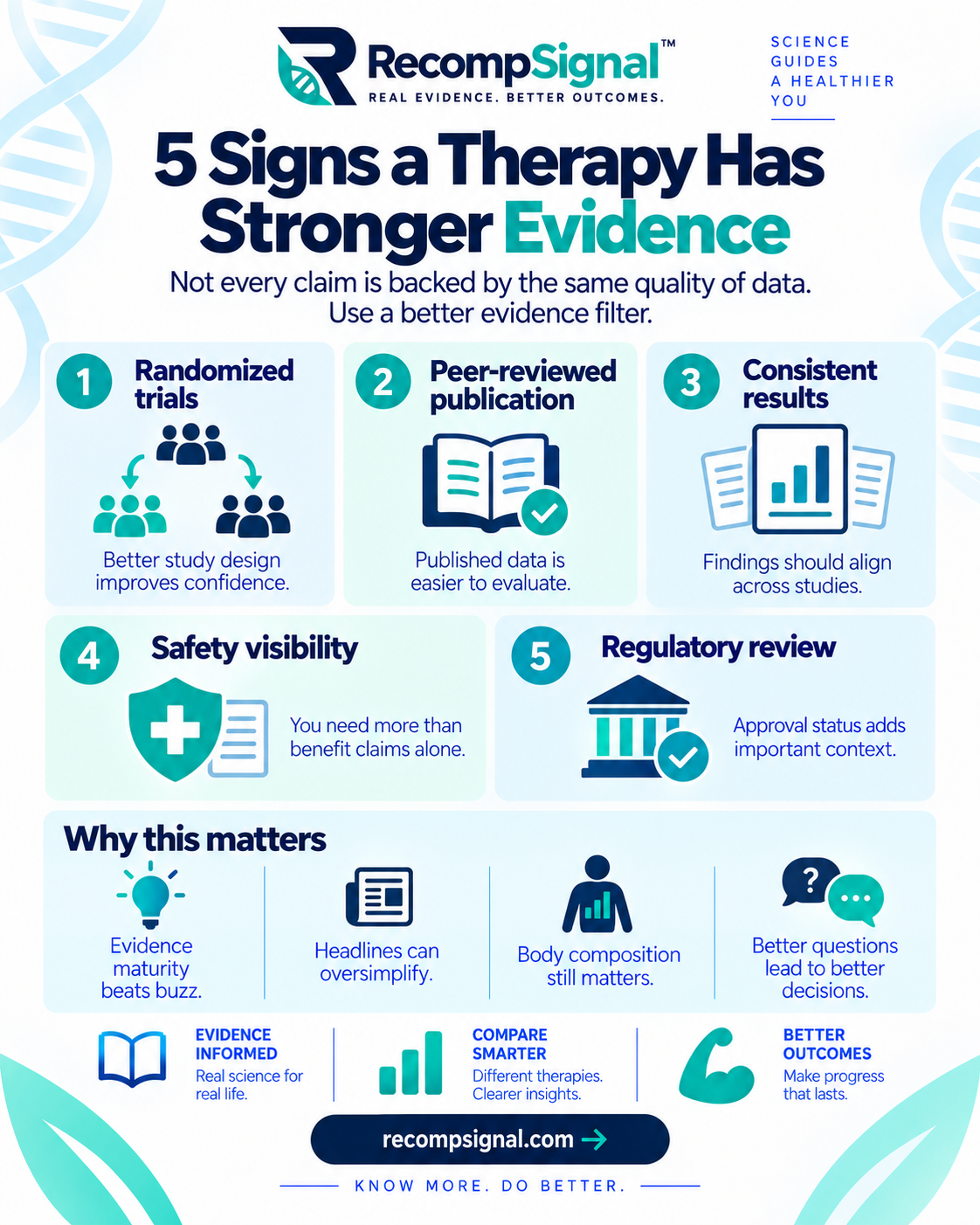
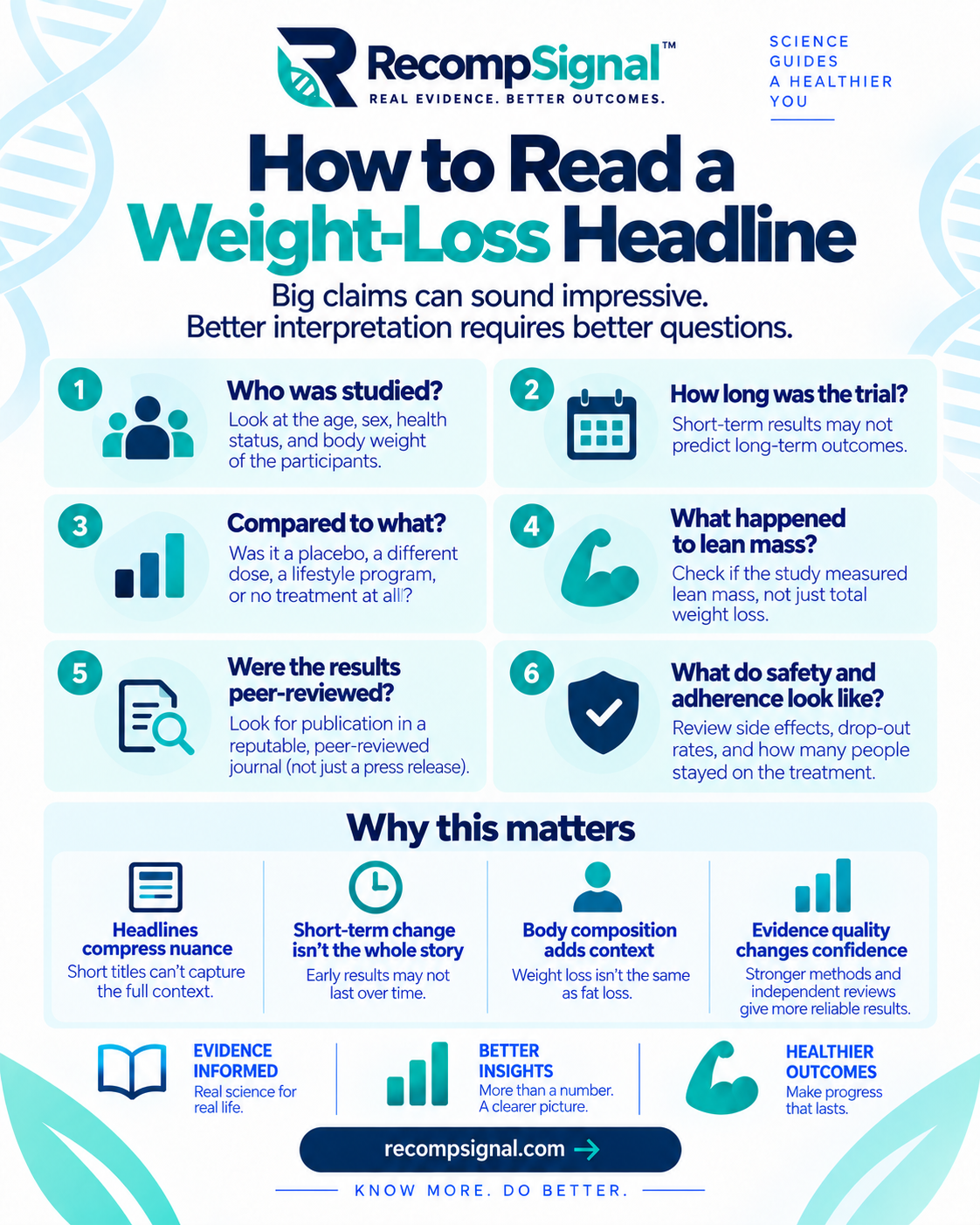
Ask about the population, comparator, duration and estimand.
Browse Insights →Each regimen is attached to its trial, population, formulation, route, frequency and duration. Target doses are not starting instructions. Dose escalation is identified without creating a self-use protocol. Registered regimens are labeled separately from published results. Where a public source omits the numerical dose, we say so.